Experience Dark Skies in Lincoln City
Look up. There’s a whole other side of Lincoln City waiting to be discovered. With its expansive coastline, dark horizons, and opportunities to experience the night sky, Lincoln City is an ideal destination for dark sky tourism.
Lincoln City has some of the darkest skies on the Oregon Coast, which makes it the perfect place for Astrotourism, or dark sky tourism. Take in night-sky-related activities such as stargazing and celestial object identification, astrophotography, and viewing eclipses and auroras at the beach.
Areas in and around Lincoln City have far less light pollution than other communities of similar size along the Oregon Coast, and on a clear night it can be an amazing place for stargazing. There are many stretches of local beach and other inland locations around town that are dark at night and allow viewers to take a visual voyage into outer space. Spring is a great time to peer into the cosmos because days and nights are nearly equally long, so more constellations and other celestial objects are visible longer. As Astrotourism grows in popularity, more resources become available to help curious viewers make the most of their stargazing experience.
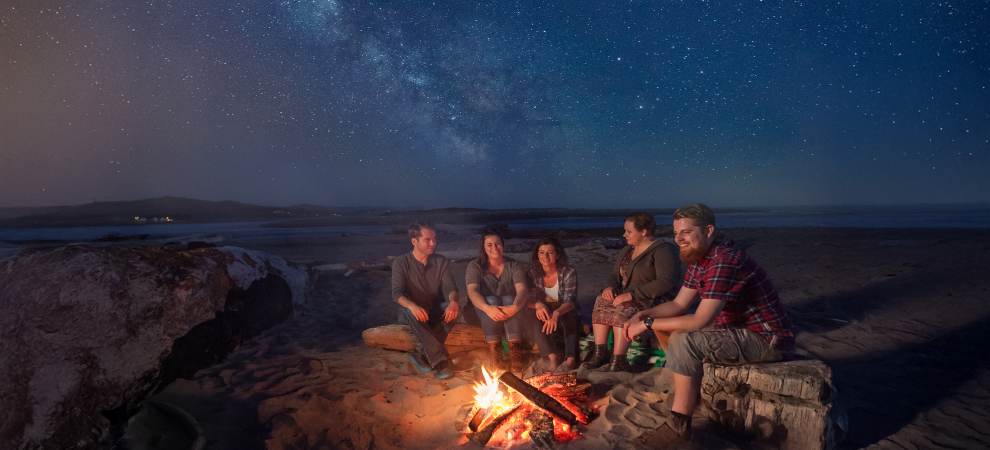
Viewing spots include Taft Beach, areas of beach between Nelscott and Delake, and Roads End Beach. Note that the Cascade Head Biosphere Region spans much of Lincoln City and extends as far south as the community college, while Cascade Head itself is located north of Roads End and offers amazing hikes that lead to impressive headlands rising above the forest and ocean. The Knoll is another great hiking destination with sweeping night sky views. Knight Park and other spots in Otis, Siletz Bay Wildlife Refuge, and East Devils Lake State Park are also excellent stargazing locations around town.
Constellations Visible from Lincoln CIty | Seasonally
Fall Constellations | September — November
| Cassiopeia | Andromeda | Pegasus | Perseus |
| Cepheus | Pisces | Cygnus | Lyra |
The two circumpolar constellations seen the the fall season (Cassiopeia and Cepheus), never set below the horizon and are visible year-round.
Winter Constellations | December — February
| Orion | Taurus | Gemini | Perseus |
| Auriga | Canis Major | Canis Minor | Eridanus |
For best viewing, look toward the southern and eastern skies after sunset. Winter brings some of the brightest stars and most recognizable constellations of the year.
Spring Constellations | March — May
| Leo | Virgo | Boötes | Ursa Major |
| Cancer | Hydra | Draco | Cassiopeia |
Spring offers some excellent northern-sky viewing, but the best constellations are often not visible until later in the evening.
Summer Constellations | June — August
| Scorpius | Sagittarius | Cygnus | Lyra |
| Aquila | Hercules | Boötes | Ophiuchus |
Summer is a great season for stargazing along the Oregon Coast, with the Milky Way shining at its brightest. Because summer nights are short, wait for full darkness, check the cloud forecast, and bring a warm layer for cool, windy coastal nights.
Preparing for a Night Out Under the Stars
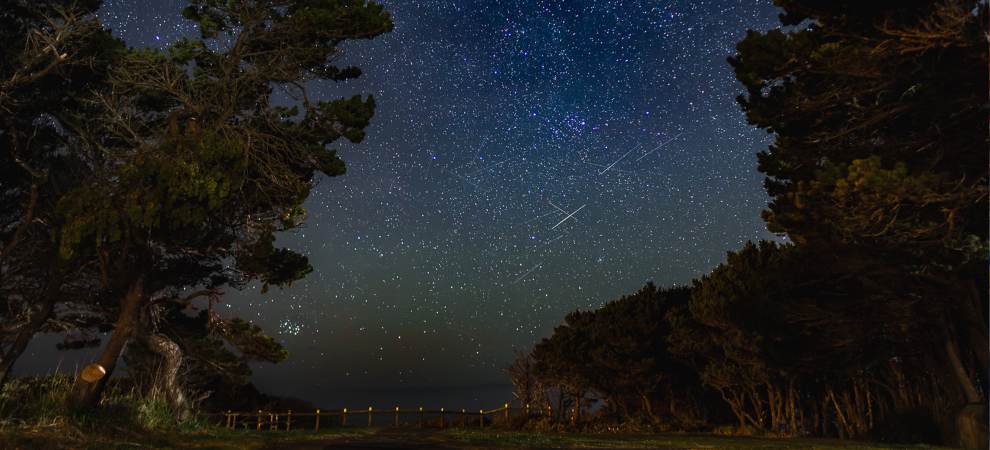
Stargazing takes minimal preparation and requires few resources. First, check the weather forecast to make sure that the evening sky will be clear. Next, select a place on the beach or around town that is devoid of light pollution. Bring warm clothes, a blanket or lawn chair, and a headlamp or flashlight that has a red lens or filter that is less intrusive to wildlife. Also include a telescope, binoculars, and a camera that can magnify an image. It’s helpful to use a map of the night sky, as digital maps and night sky apps are great resources to understand what can be seen from a specific area. Check out SkySafari 7 Pro, Stellarium Mobile, SkyView Lite, PhotoPills, Sky Tonight, and Star Walk 2, and select one of these apps that can be easily downloaded. Keep in mind that the light from your cell phone can dim night vision, so keep the brightness turned down low.
Responsible Lighting Practices
Explore Lincoln City recommends that individuals use responsible lighting practices to promote astrotourism, protect wildlife health and natural behaviors, and support human health by aligning with natural circadian rhythms. Artificial light at night disrupts nocturnal animals, disorients migratory birds, affects salmon runs, and interferes with the human sleep cycle. The good news is that small, practical changes can make a meaningful difference.
| Practice | Why It Matters |
|---|---|
| Use red light | Red-wavelength light preserves night vision and is less disruptive to wildlife than white or blue light. Use a red-lens headlamp or flashlight. |
| Shield outdoor lights | Point lights downward and use shielded fixtures, so light goes only where needed, reducing sky glow. |
| Dim your phone | Smartphone screens emit blue light that quickly kills night vision. Lower brightness or switch to night/red mode before heading outside. |
| Use lights only when needed | Turn off lights when not actively in use. Motion sensors and timers help reduce unnecessary illumination. |
| Choose warm-toned bulbs | Bulbs with a color temperature of 3000K or lower emit less blue light and are less harmful to nocturnal animals. |
| Avoid pointing lights skyward | Upward-facing or unshielded lights scatter into the atmosphere and directly contribute to light pollution. |
Since 2024, Lincoln City has been actively working toward Dark Sky Certification through the International Dark-Sky Association. This process involves auditing current outdoor lighting across the city, replacing high-glare or upward-facing fixtures with downward-shielded, warm-toned alternatives, and engaging the community in responsible lighting habits. Certification would formally recognize Lincoln City as a Dark Sky Place, helping attract astrotourists, protect coastal wildlife, and preserve the natural night environment for future generations. Adhering to responsible lighting practices will continue to enhance the health of humans, wildlife, and the community while providing a better stargazing experience at the beach.
Visit Dark Sky International and Lincoln City’s own Central Oregon Coast Friends of the Night Sky for more information about all things associated with Dark Sky/Astrotourism. These sites will give both general and specific guidance for stargazing at the beach and will improve the overall experience. Follow Explore Lincoln City on Facebook and Instagram for more information about astrotourism and other fun interactive experiences.