Dark Skies | Stewardship, Advocacy and Certification
Share
Preserving dark skies means protecting wildlife, promoting human health and allowing all to experience the awe of a night sky full of stars. Lincoln City is committed to stewarding dark skies with responsible lighting practices that safeguard the environment, promote tourism and foster a stronger, healthier community.
“Since the invention of electric streetlights and the use of artificial light at night (ALAN), we are losing the natural darkness of night literally at the speed of light. In fact, it’s estimated that 80% of Americans and nearly 33% of all humanity can no longer see the Milky Way from home.”
—Travel Oregon Dark Skies Toolkit
Why Are Dark Skies Important?
Dark skies hold immense importance for various facets of our world. They are crucial for human health, fostering a connection to nature and supporting balanced circadian rhythms. The impact on wildlife is equally significant, as natural behaviors such as health, navigation, hunting, and breeding depend on the darkness of night. Furthermore, dark skies play a vital role in our culture, providing a sense of our place in the universe, offering perspective, and serving as a source of inspiration. They also contribute to our heritage, enabling storytelling, placemaking, mythology, and tradition.
Lincoln City has relatively less light pollution than many cities of comparable size on the Oregon Coast and elsewhere in the state.
Lincoln City's Commitment to Dark Sky Stewardship
Lincoln City is deeply committed to dark sky stewardship, an endeavor that yields numerous environmental, economic, and community benefits.
Environmental and Ecological Benefits Current stewardship efforts focus on reducing light pollution, preserving nocturnal wildlife habitats, and minimizing the harmful impacts on ecosystems. Lincoln City aims to protect the night sky as a natural resource and facilitate sustainability and stewardship education.
Economic Advantages Dark sky stewardship brings economic advantages by attracting more tourists interested in stargazing and dark sky experiences, thereby increasing local economic activity through dark sky tourism. This initiative can potentially boost property values, create opportunities for new visitor experiences, and reduce energy consumption.
"One study found that for every $1 spent on dark sky-friendly lighting, there was a return on investment of $1.93 through increased tourism, demonstrating the significant potential of this certification." -Dark Sky International
Community and Health Benefits The benefits of dark sky stewardship extend to the community and to the health of the individuals who live and visit here. It improves the local quality of life, supports cultural heritage and sense of place, and promotes better lighting practices that can enhance human health. This initiative increases equity, inclusion, and accessibility to the night sky for all, encourages more responsible outdoor lighting design, and fosters increased collaboration between local stakeholders. Furthermore, it creates opportunities for community education and engagement.
The Path To Dark Sky Certification
"Dark Sky Certification offers numerous benefits for communities, tourism destinations, and individual property owners. IDA Dark Sky Place certifications attract more visitors, provide public education about dark skies, bring economic benefits to surrounding communities, and promote night skies getting darker." -Travel Oregon Dark Skies Toolkit
To achieve a “Dark Sky” certification in Oregon a community must:
Demonstrate exceptional night sky quality by implementing a robust outdoor lighting ordinance with minimal light pollution.
Conduct sky quality measurements to document darkness.
Actively engage in public outreach and education about light pollution.
Show strong community support for dark sky preservation.
Adhere to the standards set by the International Dark Sky Association (IDA) through their “International Dark Sky Places” program.
Lincoln City's Pursuit for Dark Sky Certification
Lincoln City is exceptionally well-positioned to become a certified location with Dark Skies International.
In 2024, the Lincoln City City Council directed Explore Lincoln City to investigate reducing light pollution on beaches, and the City Manager asked staff to explore Dark Sky certification. Notably, there are currently no certified dark sky locations on the Oregon Coast. Lincoln City also has less light pollution compared to other similar-sized cities on the Oregon Coast, such as Astoria, Seaside, Newport, and Coos Bay.
Explore Lincoln City's stewardship efforts align with Lincoln City’s location in the UNESCO Cascade Head Biosphere Region, the only Biosphere Region in the state of Oregon. Lincoln City boasts significant dark skies community and civic support and momentum, and dark skies drive tourism, which is Lincoln City’s number one economic driver.
Current Efforts
Current efforts include researching certification and potential contractor support, reviewing ordinances for improvements, conducting community outreach and education, evaluating and inventorying city lighting, and partnering for programming and events.
Get Involved
You can actively support Lincoln City's Dark Sky Initiative by embracing the following responsible outdoor lighting principles.
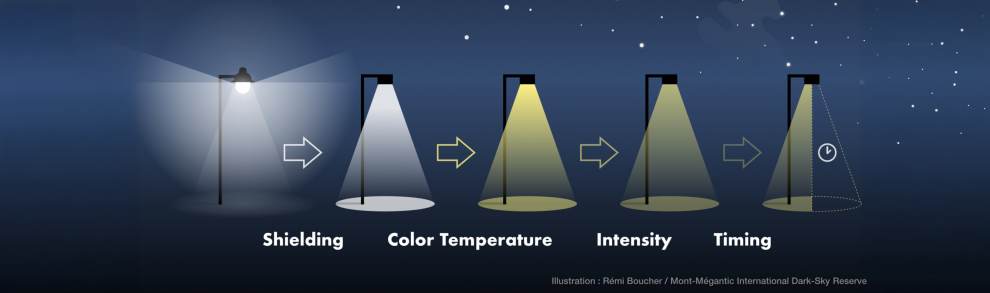
Employ the Five Responsible Outdoor Lighting Principles
Useful — Use light so it falls only where it is needed.
Targeted — Direct light so it falls only where it is needed.
Low-Level — Light should be no brighter than necessary.
Controlled — Use light only when needed.
Warm-Colored — Use warmer-color lights where possible.
Complete Your Own Home Outdoor Lighting Assessment
Lincoln City is an ideal location for Astrotourism—or dark sky tourism—a relatively recent addition to ecotourism, which focuses on sky-related tourist activities, such as stargazing, astrophotography, chasing eclipses and auroras, and visiting observatories and planetariums. Knight Park, Cascade Head Biosphere Region, Siletz Bay Wildlife Refuge, low-light areas on the beach between the Nelscott and Delake neighborhoods, and East Devils Lake State Park are a few areas inside town that are excellent for stargazing. There is far less light pollution here than many cities of comparable size on the Oregon Coast and elsewhere in the state. In fact, Lincoln City has its own dark sky club, the Central Oregon Coast Friends of the Night Sky. Visit their website for information about meetings and events that focus on all things associated with Dark SkyAstrotourism.
Experience Dark Skies in Lincoln City
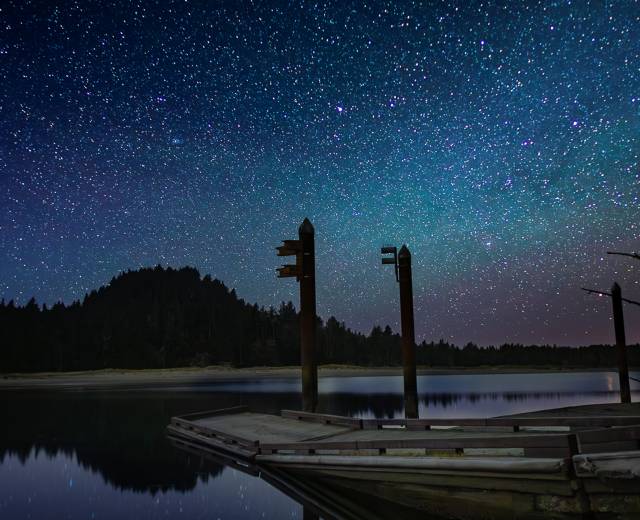
Look up. There’s a whole other side of Lincoln City waiting to be discovered. With its expansive coastline, dark horizons, and opportunities to experience the night sky, Lincoln City is an ideal destination for dark sky tourism.
Explore Without Limits
Overcoming barriers to including everyone is simply a shift in perspective: where inclusivity is not an added task or expense to your work, rather an essential investment in our humanity as a whole.
Hiking Hotspots
Lace-up your boots to explore massive headlands rising from the Pacific, lush forest groves, and, if you’re lucky, find a secret waterfall.
Tap and Brew Trail
Unleash your inner hophead! Explore Lincoln City's booming brew scene with this digital Tap and Brew Trail passport – your guide to discovering pint-sized bliss.
Glass Floats | Finders Keepers
Be on the lookout for the colorful twinkle of a hand-blown glass float when you’re exploring our beaches. As the name says, Finders Keepers!
Lincoln City Art Trail
Discover the magic of Lincoln City's art scene! Lincoln City's Art Trail passport will guide you on a unique journey, revealing captivating art at every turn.